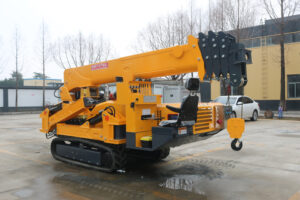
Worried about safety when considering new lifting equipment, especially in tight or sensitive environments? Many wonder if compact size means compromised safety. Let’s tackle that head-on.
Spider cranes are inherently safe when operated by trained personnel and according to manufacturer guidelines, thanks to their robust hydraulic outriggers which provide exceptional stability. Their compact design allows safe operation in confined spaces, indoors, and on delicate surfaces where larger, less agile cranes cannot safely reach or set up, minimizing risks on complex job sites.
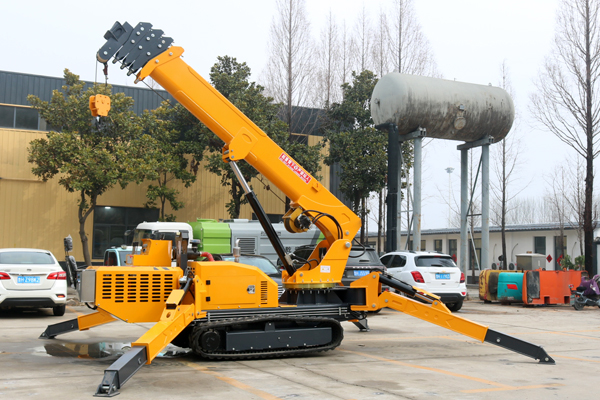
As someone who has spent years on the factory floor and working directly with overseas clients, I understand why safety is a top concern. Buyers often see the compact size of a spider crane and wonder if it can really handle heavy loads safely. Some worry about tipping, especially when operating in challenging environments. My experience shows that with proper understanding and operation, spider cranes are not just safe, but often the safest choice for many specialized lifting tasks. They are designed with stability and precision in mind. Let’s explore the key features that ensure a spider crane operates securely, even in the most demanding conditions.
What is an Outrigger on a Spider Crane?
Ever seen a crane set up with legs splayed out like a spider, wondering what those are for? Without them, lifting heavy loads would be incredibly risky. Outriggers are the foundation of a spider crane’s safety.
An outrigger on a spider crane is one of its four (or more) hydraulic support legs that extend outwards and downwards to provide a wide, stable base during lifting operations. These independently adjustable legs distribute the crane’s weight and the load across a larger area, preventing tipping and ensuring safe, stable lifting, especially in confined or uneven spaces.
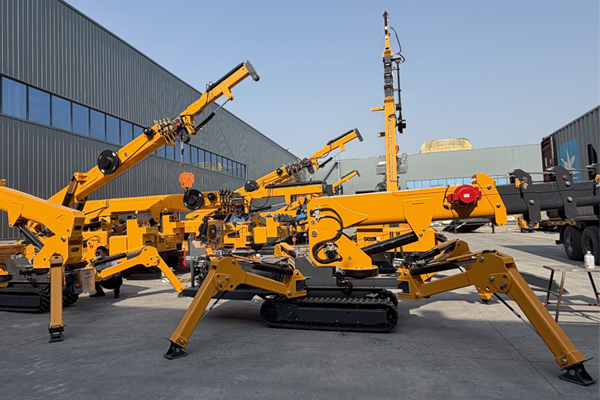
From my perspective, the outriggers are truly what make a spider crane a "spider crane." They are the critical components that differentiate these machines and ensure their exceptional stability. Each outrigger operates independently, meaning it can be adjusted to different lengths and angles to perfectly adapt to uneven ground, slopes, or restricted access areas. This flexibility is a game-changer for safety. I recall a project where a client needed to install a large skylight on a multi-story building. The rooftop was full of existing HVAC units and pipes, making a flat setup impossible for a traditional crane. Our spider crane extended its outriggers strategically, some fully, some partially, finding secure footing among the obstacles. This allowed for a perfectly level and stable base, crucial for precision glass installation. Without this adaptability, the job would have been either unsafe or impossible. Proper outrigger deployment and padding are paramount, ensuring the ground can support the distributed weight, which prevents sinking or instability. Always remember, the wider the outrigger spread, the greater the stability, allowing the crane to safely handle heavier loads and reach further.
How Outriggers Work
Each outrigger has a hydraulic cylinder that extends horizontally and then vertically, deploying a footpad onto the ground. This creates a large, firm footprint.
Importance for Stability
Outriggers effectively increase the base of support for the crane, shifting its center of gravity and significantly increasing its resistance to tipping during lifts. They distribute the weight over a much larger area than the tracks alone.
Outrigger Setup and Safety
- Leveling: Cranes must be perfectly level. Modern spider cranes have auto-leveling functions to simplify this.
- Ground Conditions: Operators must assess ground conditions, using pads or mats to spread the load if the surface is soft or delicate.
- Full Extension: For maximum safety and capacity, outriggers should always be fully extended when possible.
| Outrigger Feature | Safety Benefit | Impact on Operation |
|---|---|---|
| Independent Control | Adapts to uneven terrain | Enables setup in complex, confined areas |
| Hydraulic Power | Strong, stable support | Quick and precise leveling |
| Wide Spread | Maximized stability | Higher lifting capacities, safer operations |
| Load Sensors | Prevents overloading | Alerts operator to unsafe conditions |
Where Does the Center of Gravity Work on a Spider Crane?
Worried about a crane tipping over, especially with heavy or off-center loads? Understanding where the center of gravity lies is crucial for safe lifting. It’s not always where you think.
On a spider crane, the center of gravity (COG) shifts constantly based on the boom’s position, load weight, and outrigger deployment. For safe operation, the COG must always remain within the stable footprint created by the fully extended and properly set outriggers, preventing the crane from becoming unstable and tipping.
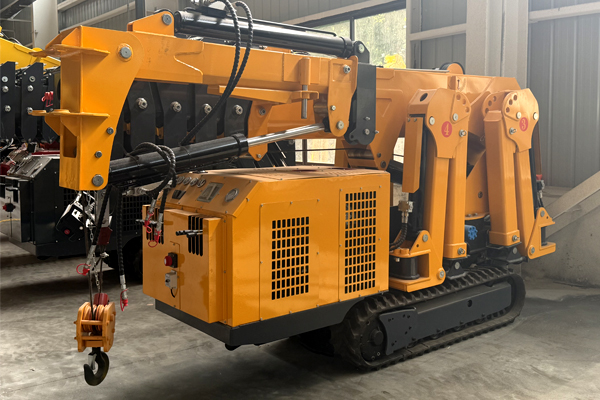
The concept of the center of gravity is fundamental to understanding crane safety. When a spider crane is stowed and tracking, its COG is relatively low and centered. However, as soon as the boom extends and a load is picked up, the COG shifts dramatically. It’s a dynamic point that moves with every change in the crane’s configuration and the load’s position. This is precisely why the outriggers are so vital. They effectively enlarge the crane’s "base," creating a wide area within which the COG must stay to ensure stability. I’ve often seen clients try to push the limits, perhaps lifting a load further out than the load chart allows. That’s a red flag. The load chart is a crucial safety tool that maps out the crane’s safe operating limits for different boom extensions and loads, always keeping the COG within the outriggers’ stability zone. A few years back, we had a client in the US who was working on a bridge inspection project. The challenge was lifting sensors at various points while maintaining stability on a narrow service road. We emphasized the importance of setting the outriggers precisely according to the load chart for each lift, even if it meant adjusting them for slight position changes. This meticulous approach ensured that the COG was always safely within the stable base, preventing any dangerous situations on an already challenging site.
Understanding Center of Gravity (COG)
The COG is the average location of the weight of an object. For a crane, it includes the crane itself, the boom, and the load.
Dynamic Shifting of COG
- Boom Extension: As the boom extends horizontally, the COG moves outwards.
- Load Weight: Heavier loads shift the COG more significantly.
- Load Position: Lifting a load at the maximum reach pushes the COG further towards the edge of the stability zone.
Ensuring Stability with COG
Always operate within the crane’s load chart limits. The outriggers are designed to create a large enough stability footprint to contain the shifting COG under safe operating conditions. Overloading or improper outrigger setup will move the COG outside this safe zone, leading to instability.
| Factor Affecting COG | Impact on Stability | Safety Precaution |
|---|---|---|
| Load Weight | Heavier load moves COG more significantly | Always check load chart, do not exceed capacity |
| Boom Angle/Extension | Lower angle/longer extension shifts COG outwards | Plan lifts carefully, stay within radius limits |
| Outrigger Spread | Wider spread creates larger stability base | Ensure outriggers are fully deployed and leveled |
| Ground Conditions | Soft ground can compromise outrigger support | Use proper ground mats, assess soil strength |
What are the Uses of Spider Cranes?
Are you struggling to find a lifting solution for awkward jobs like glass installation, interior construction, or projects in dense urban areas? Many traditional cranes are simply too big.
Spider cranes are primarily used for precision lifting in confined or hard-to-access environments, including indoor projects, glass and facade installation, steel erection, machinery placement, and rooftop work. Their compact size, powerful lifting capacity, and ability to navigate narrow entry points make them invaluable for specialized tasks.
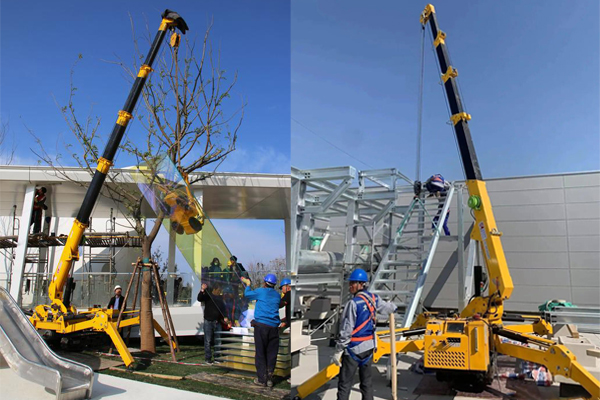
Having worked with diverse clients globally, I’ve seen firsthand how spider cranes solve problems that no other equipment can. Their versatility is truly remarkable, and it directly contributes to safer and more efficient project execution. For instance, consider delicate glass installation on a skyscraper. The precision control of a spider crane, combined with its ability to work at height from a compact footprint, makes it ideal for positioning large, heavy glass panels without risking damage or endangering workers. One memorable project involved replacing a faulty ventilation unit on the roof of a data center. The only access point was through a tight service corridor and then up a goods lift. A traditional crane would have required major road closures and extensive setup. Our spider crane, with its narrow chassis and electric power option, maneuvered seamlessly inside, ascended to the roof, and replaced the unit with minimal disruption. This kind of flexibility is why they are becoming indispensable for construction companies, rental businesses, and specialized contractors who demand both power and agility.
Key Application Areas
- Glass and Facade Installation: Precise placement of large, heavy glass panels and curtain walls.
- Steel Erection: Lifting and positioning steel beams and structures in tight building envelopes.
- Indoor Projects: Machinery installation, structural work, or maintenance in factories, malls, or public buildings, often emission-free with electric models.
- Rooftop Lifting: Placing HVAC units, solar panels, or other equipment on top of buildings.
- Confined Spaces: Tunnels, basements, urban job sites with limited access.
- Landscaping and Artistic Installations: Moving heavy stones, sculptures, or trees in gardens and public spaces.
Why Spider Cranes Excel in These Uses
Their combination of compact size, powerful outrigger stabilization, and precise controls allows them to perform complex lifts safely in environments where traditional cranes cannot operate or would pose significant logistical and safety challenges.
| Application Type | Specific Task | Safety Benefit |
|---|---|---|
| Building Construction | Interior steel beams, precast concrete | Minimal disruption, precise indoor placement |
| HVAC/MEP | Rooftop unit placement, ductwork | Access via small entries, reduced manual handling |
| Glazing | Window and facade installation | Accurate positioning, less risk to materials and workers |
| Renovation | Structural repairs, material handling | Works in existing structures without major demolition |
| Marine/Port | Boat maintenance, small cargo lifts | Maneuvers on piers, handles heavy components |
Conclusion
Spider cranes are exceptionally safe and versatile machines when used correctly, offering powerful, stable lifting in places where no other crane can go. Understanding outriggers, center of gravity, and their diverse uses ensures smart, secure operations.